 English
GreenValence / Knowledge & preparation
Knowledge & preparation
Loose leaves, fragrant herbs and a little time turn hot water into a cup of tea worth looking forward to.
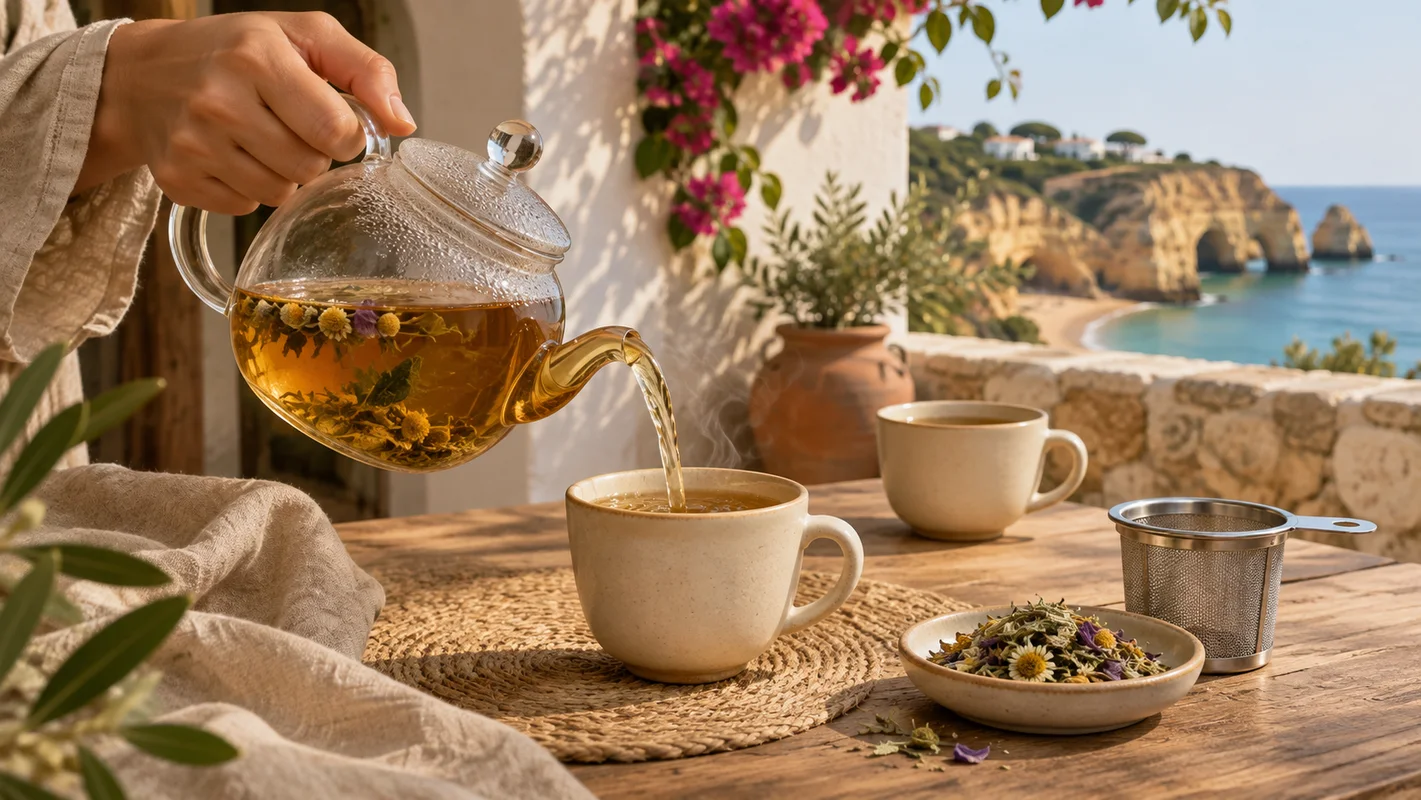
A good cup often begins with a small observation. Perhaps your green tea tastes a little more astringent today than it did yesterday. Or perhaps the scent of an herbal blend only comes through when you take the time to enjoy it from your favourite cup. Steeping time, water and the amount of tea each play a part. Try two cups side by side to see what you prefer.
How steeping time changes the flavour
The longer the leaves stay in the water, the more time soluble compounds have to dissolve. Some green teas become noticeably more astringent, and the aroma may develop differently. A darker colour alone tells you little about how strong the tea tastes.
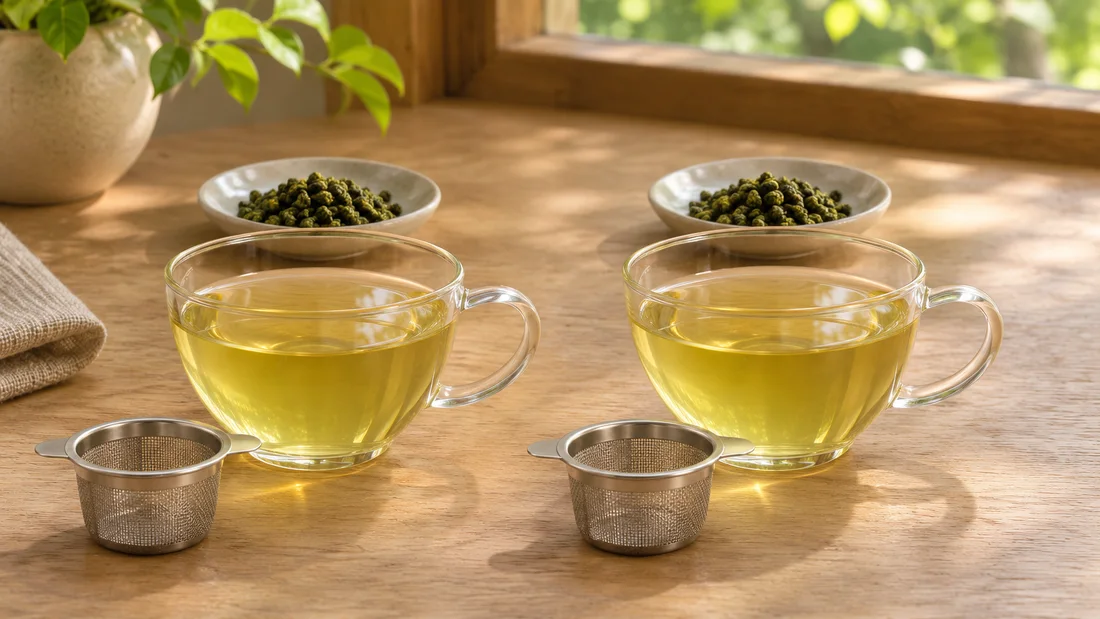
For a quick tasting, take two identical cups, two strainers and one loose-leaf green tea. Use the same amount of tea and water at the same temperature in both cups. Start the timer as you pour. Steep one cup at the lower end of the recommended time and the other at the upper end. Remove each strainer when its time is up. Taste both teas at a similar drinking temperature. Notice the aroma first, then how long the astringency lingers after a sip. You may discover exactly the cup you would like to make again.
Water temperature depends on the tea
With green tea, the water temperature affects how pronounced the astringent notes become. After boiling the water, let it cool to the temperature given on the pack. A bold Gunpowder green tea can reveal different notes from a delicate Japanese green tea. The right temperature depends on the variety.
Use water at a rolling boil to brew herbal and fruit infusions. Germany’s Federal Institute for Risk Assessment (BfR) recommends steeping for at least five minutes. Follow the instructions on the pack, especially if they specify a longer steep. To serve an herbal infusion cold, brew it hot and cool it promptly. Only cold-brew products specifically labelled for that purpose.
How to brew loose-leaf tea
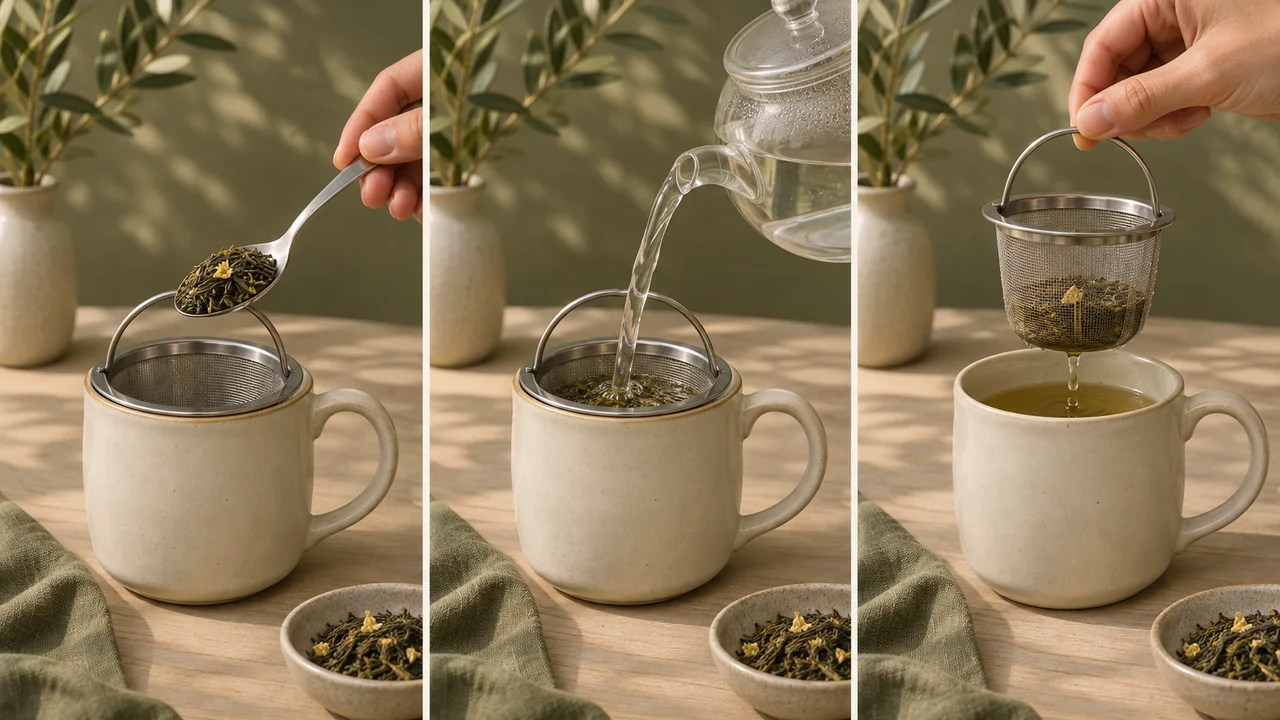
- Put the amount of loose leaves recommended on the pack for your volume of water into a cup strainer. A slightly larger strainer gives the leaves room to unfurl.
- Pour over the water at the recommended temperature and set a timer.
- Lift the strainer from the cup when the steeping time is up. If you brewed the loose leaves in a teapot, pour the tea through a fine strainer.
Teaspoons and cups vary in size. A measuring jug helps you use the same amount of water in both cups. If the instructions give a weight in grams, try weighing the dry leaves the first time. It will be easier to repeat the cup you liked.
If the tea tastes too bitter or too mild
If your green tea is too astringent, choose a shorter steep within the recommended range next time. If it tastes too mild, first check the ratio of tea to water. Change just one thing at a time to see what made the difference. For herbal infusions, keep using boiling water and follow the recommended minimum steeping time.
Questions about brewing tea
Can I steep green tea a second time?
Some loose-leaf teas taste good on a second steep, with a lighter flavour or different notes. Whether to steep again, and how to do it, depends on the variety.
Can I leave the leaves in the cup?
You can put loose leaves straight into a cup. They continue to steep as long as they are in the water. For a consistent flavour, strain the tea after the recommended time.
How should I store loose-leaf tea?
Keep it well sealed, dry and out of the light. Store it away from strongly scented spices to preserve its own aroma.
What are green tea and herbal tea made from?
Green tea comes from the leaves of the tea plant. Herbal infusions can contain leaves, flowers, fruit and other plant parts. The plant guide introduces the individual ingredients, their flavours and how they are processed.